 Kotor City Guide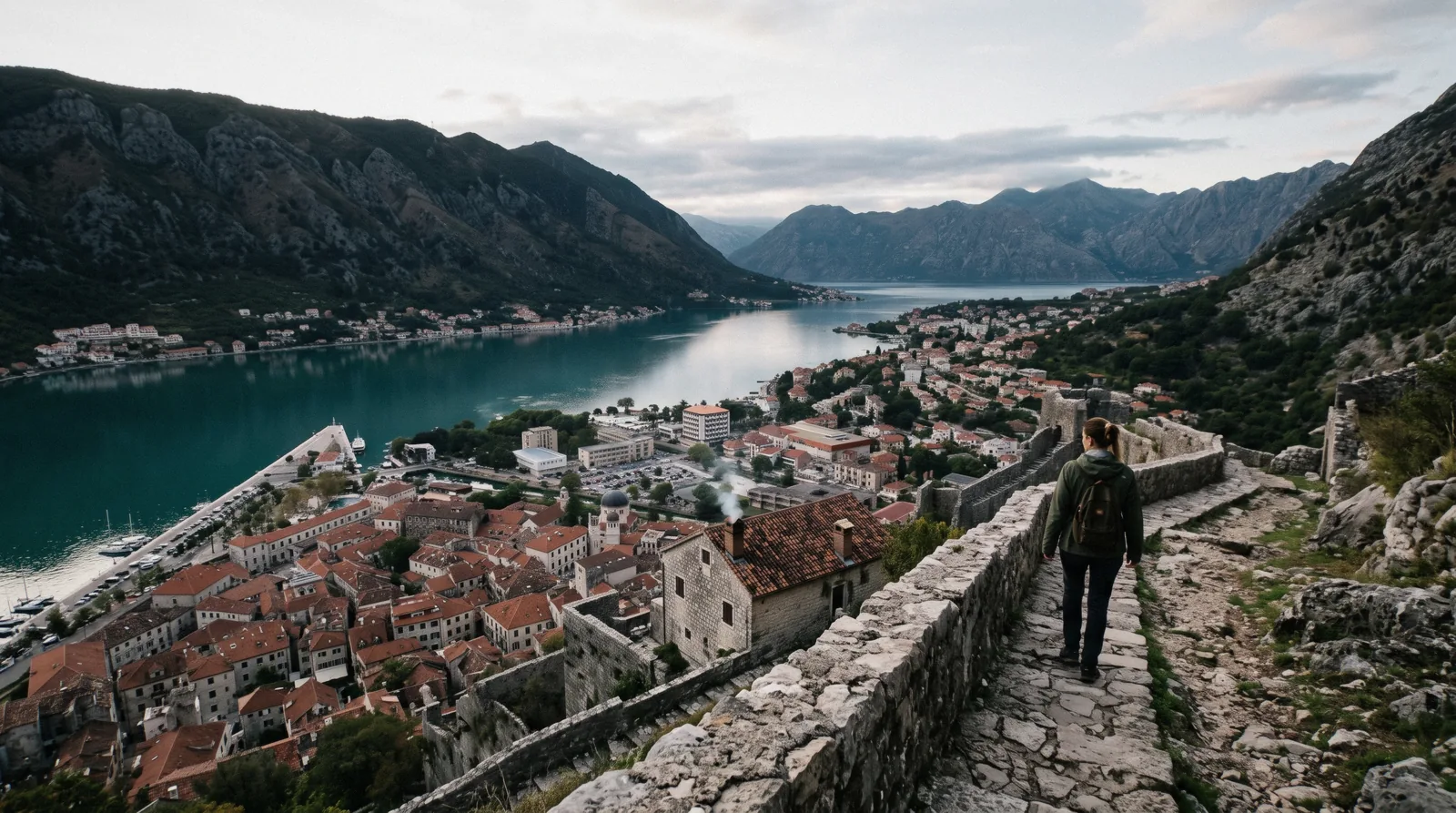
Is Kotor Worth Visiting? The Honest Answer
Is Kotor worth visiting? Yes, and here is the honest arithmetic. The question deserves a straight answer, because Kotor's popularity invites suspicion. This page gives the verdict first, then the money, the free list, the honest number of nights and the honest list of people who should skip it. Everything else on this site does the detail work. This page does the deciding. The full guide lives on Kotor City Guide.
Quick answer The honest answer first, then the numbers
Yes, Kotor is worth visiting. A UNESCO-listed walled town costs nothing to walk into, two very different views over the bay are worth their ticket prices, and boat mornings on a fjord-like inlet are the best hours in Montenegro. The town earned roughly 523 scheduled cruise calls in 2026, so the demand is not marketing. Two honest caveats come with the yes. On big ship days the lanes are packed from about midday to late afternoon. And in July and August the average high sits at 29.6 to 29.7 degrees Celsius, which turns the walls climb into an early-morning job. Come on the right days and Kotor justifies the trip many times over. Come on a two-ship July afternoon and it can feel like a queue with stone walls.
What The Money Actually Buys
Kotor is cheap to enjoy properly. The headline spend is the two climbs, and both are worth it. The fortress path runs about 4.5 km above the town, with around 1,350 stone steps rising roughly 280 m to San Giovanni fortress.
Budget 45 to 60 minutes up and about 30 down. The gate price is €15 ($17.12) in the main season, with about €8 reported in winter, and no official page publishes the price, so the figure comes from repeated gate reports. The second climb needs no legs at all.
The cable car rises to the Krstac ridge in 11 minutes for €25 ($28.53) return, €7 for children aged 2 to 12. Between those two, the paid list is short: the cathedral at about €4 and the Maritime Museum at €4. A bay morning adds more.
See the prices side by side, then pick two, not all.
What Costs Nothing
The free list is the reason the verdict stays yes. Walking the walled town costs nothing, and it is the thing people come for. The Sea Gate of 1555 opens onto the Square of Arms with its leaning 1602 Clock Tower.
St Luke's church, built in 1195 and said to be the only building in town that survived the great earthquakes intact, publishes no ticket, so treat entry as free and expect the door may ask a small donation. The cats are a civic institution with their own square by the Sea Gate, a cat museum and a charity running spay-and-neuter. Swimming off the town slabs is free, though there is no sandy beach and no shallow entry.
And the best free walk in the region starts near Tabacina: the Ladder of Kotor, an Austro-Hungarian zigzag of about 70 switchbacks climbing to the Krstac pass at about 940 m, connecting with the walls path above the gate. Our free things to do page runs the full list.
How Many Nights It Needs
One day covers the walled town and one climb. That is the honest minimum and it is enough to leave glad. Two nights cover the essentials: the old town on foot in half a day, the walls or the cable car in a second half, and a bay morning on a boat.
Three nights add the mountain, whether that is the cable car ridge, the serpentine over to Njeguši and Cetinje, or Lovćen National Park. The arithmetic is simple because the town is small. A cruise passenger walking off the pier reaches the Sea Gate in 2 to 5 minutes and can see a great deal, but cannot see it well, because ship-day middays are exactly when the town is fullest.
Staying overnight buys you the town at 8 in the morning and 9 at night, when the ships have gone and the walls are lit.
The Two Views, Honestly Priced
People ask if the tickets are worth it. Both are. The fortress walls are the postcard from inside the picture: 45 to 60 minutes of stairs past the Church of Our Lady of Remedy, half way up the path, to a summit where the whole bay folds out below you.
Go before 9 in summer. The cable car is the postcard from above: an 11-minute ride to the ridge, with an Alpine Coaster, a zipline-coaster and an aerobar at the top station, and a last ride down at 20:00 so you can watch the town lights come on. Taxis charge about €20 each way to the lower station at Dub, or the hop-on bus reaches it by road.
If €15 ($17.12) and €25 ($28.53) together feel steep, do the walls at gate price and take the free Ladder instead of the gondola. Our fortress page and cable car page carry the full detail, and best views of Kotor ranks every option including the free ones.
When To Go
The shoulder months win on every count. May averages 22.5 degrees, June 26.8, September 24.9 and October 20.9. The water is warm and the ship schedule, while year-round, is thinnest at the edges of the season.
July and August average 29.6 to 29.7 degrees and bring the biggest ships together, so early mornings and evenings do the sightseeing. November is the wettest month at 354 mm, which is the bay's real winter face, and the mountains rather than the sea make that rain. Our best time to visit page and weather page carry the monthly numbers, and cruise port explains how to check whether your chosen days are ship days.
Who It Does Not Suit
Honesty requires the negative list. Kotor does not suit a beach holiday: the town has no sand, swimming is off stone slabs with deep water and no lifeguards, and the sandy beaches people mean sit across the bay on the Tivat side. It does not suit anyone who wants flat sightseeing, because both big views start with stairs or a ride.
It is a poor fit for travellers who cannot tolerate crowds, since two-ship days compress thousands of people into a small walled town. And it does not suit a nightlife-first trip in the off-season, when the lanes go quiet early. in July and August the story is different. For everything else, from food to cats to canyons, our things to do hub has the breadth.
The Best Three Hours You Can Buy
If the verdict needed one argument, it is the bay itself, seen from the water. The Blue Cave speedboat tour runs a three-hour loop out of Kotor: twenty minutes at Our Lady of the Rocks, inside a former Yugoslav submarine tunnel, past the Mamula fortress, then half an hour swimming at the Blue Cave. It is rated 4.8 from 4,998 platform reviews. Two practical notes from the operator: boats no longer enter the cave, so you swim in from the mouth, and since the island admission at Our Lady of the Rocks became €5 ($5.71) per guest in cash from the season change, that fee is not in the boat price.
No toilet on board. Swimwear is not allowed on the island, so bring a cover-up. The full detail sits on our Blue Cave page, with Perast and Our Lady of the Rocks for the DIY version.
If the answer is yes, these pages turn the verdict into a plan.
the two-night itinerary that fits the essentials
the full cost picture beyond the tickets
the bay itself, 28 km long and 107.3 km of shoreline
Questions
Is Kotor worth visiting in one day?
Yes. The walled town takes half a day on foot and the walls climb takes half a morning, so one day covers the two essentials. The compromise is timing: a cruise passenger sees the town at its most crowded, while a day visitor arriving early or staying to the evening gets the better version.
Is Kotor better than Dubrovnik?
Different, and cheaper at the gate. Kotor's walled town is free to enter, its fortress ticket is €15 ($17.12), and it adds a fjord-like bay with boat mornings and a cable car ridge that Dubrovnik cannot offer. Dubrovnik is larger and more famous. Neither is objectively better, but for price and variety of terrain in a small area, Kotor competes hard.
How many days does Kotor need?
Two nights cover the essentials: the old town, one or both climbs, and a bay morning. Three nights add the mountain route over the serpentine to Njeguši, Cetinje and Lovćen. One day works but leaves the water and the ridge undone.
Is Kotor expensive?
No. The walled town is free, the two headline tickets cost €15 ($17.12) and €25 ($28.53), the cathedral and museum are about €4 each, and the residence tax is €1 ($1.14) per person per night. A three-hour speedboat circuit is the biggest single item at US$63 as listed on the platform, which bills in your own currency.
When is Kotor least crowded?
On days with no ships in port, and in the shoulder months of May, June, September and October. Cruise calls run all season, about 523 are scheduled for 2026, so the real rule is to sightsee before 9 or after 17 on any day a ship docks.
Is Kotor worth visiting in winter?
It is a different town. The walls gate drops to about €8 reported between November and March, the lanes are quiet, and the cathedral and Maritime Museum stay open. November is the wettest month at 354 mm, so pack for rain. For a short quiet city break with mountain views, it works.
We may earn a commission if you book through one of our links, at no extra cost to you. Full affiliate disclosure