 Kotor City Guide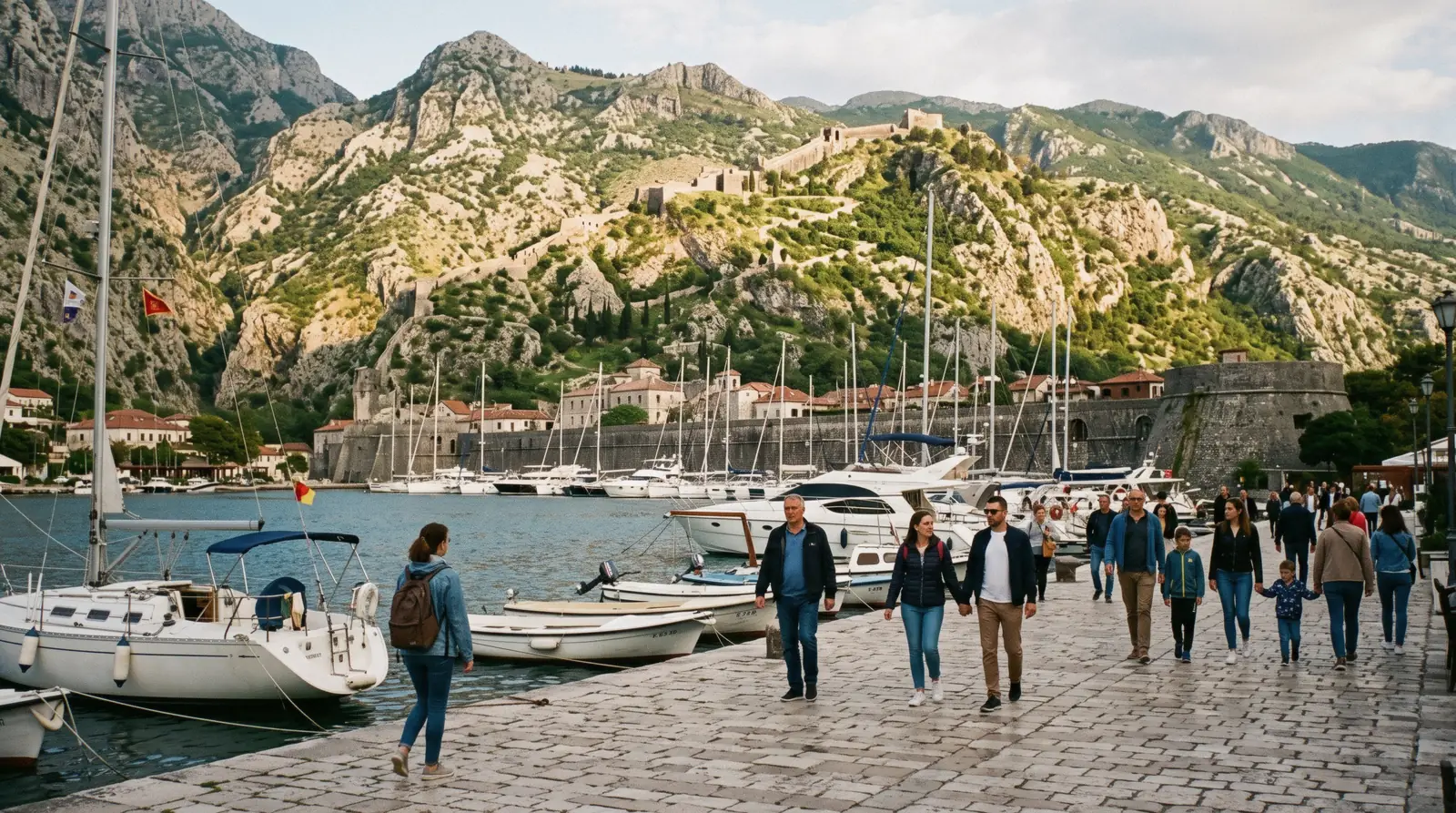
When to Visit Kotor: Ships, Heat and Light by Month
The best time to visit Kotor is a trade between three things: heat, ships and rain. The weather data puts the sweet months at the edges of summer. The cruise schedule puts its biggest crowds in the middle of it. Winter solves the crowd problem and then drowns it, because November is the wettest month of the year by a wide margin. This page walks through all twelve months with the actual figures, then hands you off to the pages that own the detail. For raw weather, see our Kotor weather page. For what the money looks like, see Kotor costs. The full guide lives on Kotor City Guide.
Quick answer The answer first, then the details that decide it
If you want warm water, open boats and survivable midday streets, come in late May, June, September or early October. May averages a high of 22.5C (72.5F), June 26.8C (80.2F), September 24.9C (76.8F) and October 20.9C (69.6F). July and August average 29.6C and 29.7C (85F) and carry the heaviest cruise traffic together with the highest prices. November is the wettest month at 354 mm of rain. February is cold and wet but it is carnival season, and late August brings Boka Night, the lantern-lit boat procession on the bay. Pick your month from the table below, then read the season that matches it.
The Twelve Months at a Glance
Monthly Climate Table
Read the table as a planning tool. Match the temperature column to what you want to be doing: walking the walls is a different proposition at 29.7C than at 20.9C, and the 1,350 stone steps to San Giovanni fortress have no shade. Match the rain column to your tolerance for grey days.
The low temperatures are only published for three months in the dataset we use, so the rest read as not stated rather than guessed.
| Month | Avg high | F gloss | Avg low | Rain mm | The month in one line |
|---|---|---|---|---|---|
| January | 10.9C | 51.6F | 5.0C | 237 | Cold, wet, quiet, cheapest beds |
| February | 11.9C | 53.4F | not stated | 240 | Carnival month, still very wet |
| March | 14.4C | 57.9F | not stated | 201 | First mild days, rain easing |
| April | 17.9C | 64.2F | not stated | 174 | Green and fresh, water still cold |
| May | 22.5C | 72.5F | not stated | 152 | Shoulder season begins in earnest |
| June | 26.8C | 80.2F | not stated | 96 | Warm water, dry, before the peak |
| July | 29.6C | 85.3F | 22.0C | 62 | Hottest, driest, busiest |
| August | 29.7C | 85.5F | 22.3C | 84 | As July, plus Boka Night late in the month |
| September | 24.9C | 76.8F | not stated | 207 | Warm sea, big cruise month |
| October | 20.9C | 69.6F | not stated | 229 | Mild days, rain climbing |
| November | 16.3C | 61.3F | not stated | 354 | The wettest month of the year |
| December | 12.3C | 54.1F | not stated | 313 | Cold, damp, atmospheric, quiet |
How to Use This Table
Three readings matter more than the rest. First, the June rain figure of 96 mm is the lowest of the year besides July's 62 mm and August's 84 mm, which makes June the best warmth-to-dryness ratio on the board. Second, September's 207 mm is a caution: the rain comes back fast after the summer, usually in short heavy episodes rather than all-day drizzle, but a September week can catch one.
Third, the November figure of 354 mm is more than five times the July figure. Anyone planning a winter trip to Kotor should plan around rain as the default, not the exception, and read our rainy day Kotor page before packing.
The Shoulder Case: May, June, September and October
The shoulder months are the honest answer to when to visit Kotor, and the numbers back the claim rather than decorate it. May's average high of 22.5C (72.5F) is warm enough for swimming off the town slabs by local standards and cool enough that the walls climb before breakfast is a pleasure instead of an endurance event. June at 26.8C (80.2F) adds reliable beach weather while staying under the 30C line that July and August cross. September at 24.9C (76.8F) keeps the sea at its warmest for the year while the air softens. October at 20.9C (69.6F) is the last month most boat operators would call high season on the water.
May and June in Detail
May is when the bay fully wakes up. The rain total of 152 mm is half of November's, the days stretch long, and the walled town is busy but not packed outside a handful of ship days. The water is still on the cool side, calm and clear as it always is, but the swimming off the stone slabs along the Kotor beaches waterfront starts to feel like a real option rather than a dare.
June is the month this guide would pick if it could pick only one. The 96 mm rain figure is the second driest of the year, the 26.8C average high is hot but humane, and the school-holiday crowds have not arrived. One note on the water: Kotor town has no sandy beach at all, swimming is off quays and slabs, and the sandy beaches people search for sit on the Tivat side and toward Budva.
September and October in Detail
September needs one honest caveat, and it is a big one: about 41 of the year's roughly 523 cruise calls land in this single month, one of the heaviest on the schedule. The old town lanes between the Sea Gate and the Arms Square can be shoulder to shoulder on a two-ship midday. The fix is simple and free.
Do the town early, do the water midday, and do the walls or the cable car late. The ships clear by late afternoon and the town belongs to the residents again. October at 20.9C is the quieter twin.
Sea temperatures lag the air, so swimming stays comfortable through the first half of the month, and the 229 mm rain figure mostly arrives as frontal systems you can see coming. It is the month for walkers, photographers and anyone who wants the walls path nearly to themselves on a weekday.
What the Shoulder Months Cost
The ticketed sights do not change price much across the year. The walls gate is €15 ($17.12) in the main season with about €8 ($9.13) reported in the November to March window, children under 12 free. The cable car charges €25 ($28.53) return for adults and €7 ($7.99) for children aged 2 to 12 in any month it runs.
St Tryphon's Cathedral is about €4 ($4.56) and the Maritime Museum €4 ($4.56). The real shoulder-season savings are in beds and boats: no published nightly-rate table exists for Kotor accommodation, but the supply-and-demand logic of a resort town applies, and boat operators run fuller schedules at fuller prices in July and August. Our Kotor costs page works the daily budget in detail.
July and August: The Heat and the Ships
High summer in Kotor is not a mistake. It is a trade, and you should walk into it knowing exactly what you are trading. On the plus side: the driest weather of the year, 62 mm in July and 84 mm in August, the warmest sea, the longest evenings, and every boat, gondola and beach concession running at full timetable. On the minus side: average highs of 29.6C (85.3F) and 29.7C (85.5F), overnight lows that only fall to 22C (71.6F), peak cruise traffic, peak prices, and lanes that hold the heat like the stone oven they effectively are.
How Hot Is It Really
An average high near 30C does not sound extreme to anyone from a continental summer. The difference is the geometry. Kotor sits at the head of a 28 km ria walled in by the Orjen and Lovćen massifs, so the afternoon sea breeze that cools the open coast arrives weak or not at all.
Stone lanes, stone squares and stone walls radiate until well after sunset. The practical pattern that works: the walls climb or the Ladder of Kotor before 08:00, the old town and the cathedral mid-morning, the water or the air-conditioned Maritime Museum in the afternoon, and the town square life after dark, when the lanes fill and the fortress switchbacks glow above. The last cable car down runs at 20:00, so an evening ridge view needs an earlier ascent.
Ships in High Season
Kotor calls itself the third cruise destination in the Adriatic after Venice and Dubrovnik, and the 2026 schedule lists about 523 calls from roughly 85 ships. The pier sits about 100 m from the old town walls, passengers walk 2 to 5 minutes to the Sea Gate, and because every ship must pass the 340-metre Verige Strait to reach the pier, arrivals stack and slip through the day. Two-ship days pack the lanes hardest in the middle hours.
Check a ship-day calendar before you fix your dates, read our cruise port page for the mechanics, and structure high-summer days so the town work happens outside the ship window.
Making August Work Anyway
August has one card no other month holds: Boka Night, the Bokeljska Noć procession of decorated, lantern-lit boats on the bay with fireworks, held on a late-August Saturday. The 2026 edition is expected on Saturday 22 August, though dates move and should be confirmed on the official channels. If late August is when you can travel, book beds early, accept the heat, and plan the day around shade and water.
A swim stop helps enormously, and the Boka Bay full-day guided cruise with swim stop is the cheapest per-hour way to spend a hot day on the water, running the full loop past Perast, the strait, Herceg Novi and the Blue Cave when the sea allows.
The Wet Winter: November to March
Winter is when Kotor belongs to itself. Only about 1,360 people live inside the old town, and without the ships you can hear that. It is also when the mountains collect their debt. November averages 354 mm of rain, December 313 mm, January 237 mm and February 240 mm. These are not drizzle figures. The bay's winter rain comes off the Dinaric wall in sustained fronts, and the town's small size becomes a limitation rather than a charm when day three of a wet week arrives.
What Stays Open
The town itself never closes. The walls, the Sea Gate, the Arms Square, the cats and the Cats' Square are all free and open in any weather, and St Luke's church from 1195 has no published ticket. The cathedral keeps daily hours, though the in-season 09:00 to 19:00 window contracts out of season.
The Maritime Museum runs short days from mid-October. Two big seasonal closures matter for planners: the Lovćen mausoleum closes to visits in the winter window, and the cable car shuts for wind or maintenance with little notice in any season, more often in the cold one. The walls gate price drops to about €8 ($9.13) reported between November and March, which is the one winter discount worth noting.
Who Winter Suits
Winter suits a specific traveller and fails a different one. It suits city-break visitors who want the walled town, the cathedral, the museum, long taverna lunches and photographs with no crowds in them. It suits anyone pairing Kotor with the mountains, because Durmitor, Tara and Ostrog monastery day trip runs the country's vertical range in thirteen hours and the note on the card is right: Durmitor sits a climate zone above the coast, so bring a layer even when the bay looks mild.
Winter fails anyone coming for swimming, boat days on a fixed schedule, or the cable car as a must-do. If that is your trip, read our is Kotor worth visiting page and book for the shoulder instead.
The February Exception
February is statistically as wet as January, at 240 mm against 237 mm, but it is also carnival month, which changes the character of the town entirely. Kotor's carnival season traditionally opens around St Tryphon's feast day on 3 February, the day of the town's patron saint whose relics rest in the cathedral, and closes with a main parade. An International Summer Carnival follows in late July or August.
The exact dates shift every year and even the sources disagree, so treat any printed date as provisional and confirm on the official tourism channels. Cold-weather carnival in a Venetian walled town is a genuine experience, and February hotel prices are the year's lowest.
Events That Anchor a Date
If your dates are flexible, two events are worth building a trip around, and one water ritual is worth knowing about if you land near it. All dates here move or need confirmation, so the rule is to fix the flight only after fixing the event.
Carnival, February
The carnival season opens around 3 February, St Tryphon's feast day, and runs to a main parade, with sources differing on the precise 2026 window. Expect masquerade, music and a town that feels locally owned in a way it does not in July. The weather will be cold and likely wet, 11.9C is the average high and 240 mm the average rain, so this is an atmosphere trip rather than a weather trip.
Pair it with the cathedral, the Maritime Museum and our Kotor events calendar, which tracks the confirmed dates as they are published.
Boka Night, Late August
Bokeljska Noć is the bay's signature night: a procession of decorated, lantern-lit boats crossing the water with fireworks, held on a Saturday in late August. The 2026 edition is expected on Saturday 22 August. Book accommodation well ahead for that weekend, expect the quays to be crowded from the evening on, and position yourself on the waterfront with time to spare.
It is the single best reason to accept high-summer conditions, and our Kotor events page carries the confirmation once the date is official.
Fašinada, 22 July
Every 22 July at sunset, residents row out to Our Lady of the Rocks and throw stones at the artificial island to widen it, an unbroken custom tied to the 1452 legend of the found icon. It happens off Perast, 12 km up the coast road. If your dates straddle it, the Perast page explains the logistics and the water taxis from the quay.
It is a local ritual first and a spectacle second, so go with that expectation.
Ships, Seasons and Timing Your Days
Whatever month you choose, the daily rhythm of the ships matters as much as the monthly climate. The pier is effectively next to the old town, tendering is rare, and the walking distance from gangway to Sea Gate is 2 to 5 minutes. That convenience is exactly what floods the lanes. Around 523 calls in 2026 works out to more than one ship-day per calendar day on average across the season, so the question is never whether ships are in, it is how many and when.
The Anti-Crowd Day Pattern
The pattern that works in every month from April to October: be inside the walls by 07:30, climb then. The walls entrances are staffed 07:00 to 20:00 in the main season and the early light on the switchbacks is the best of the day, with the whole bay laid out below. Come down by 10:00, do the cathedral before the groups thicken, then leave the walled town entirely for the middle of the day.
That is the slot for a boat, a bus along the bay, the cable car or the serpentine. Return after 16:00 when the ships have thinned, and give the evening to the squares. Our things to do hub and the 1-day, 2-day and 3-day itineraries slot every activity into this pattern.
Shoulder Months on the Water
Boat season effectively runs with the shoulder. In May, June, September and October the speedboat circuits and the big-ship day cruise run reliable timetables, the swell is statistically calmer than the storm months, and the swim stop at the cave is a pleasure rather than a shiver. The Blue Cave itself changed its rules for the 2026 season from late May: boats no longer enter, and visitors swim in from the mouth when the skipper judges the swell safe.
That rule is date-sensitive and gets re-checked each spring, so read the cave page before booking a boat-centered trip in any month.
Two Tours That Fit the Season
Both cards below are booked through the platform in your own currency. Prices are the platform's listed dollar figures.
Where This Page Hands Off
This page owns the when. Other pages own the what, the where and the how much. The full weather breakdown carries the month-by-month climate detail, the costs page prices a day in each season, and the events calendar holds the confirmed festival dates once they are published. If you are still weighing the trip itself, start at is Kotor worth visiting, then build the days on the plan hub.
When to Visit Kotor: Questions
What is the best month to visit Kotor?
June, if one month must carry the title. Its 26.8C average high is warm enough for everything on the water, its 96 mm of rain is the second lowest of the year, and it sits before the peak of the cruise schedule and the school holidays. May at 22.5C and September at 24.9C are the close runners-up. If your trip is built around an event, the answer changes: February for carnival, late August for Boka Night.
Is Kotor too hot in August?
It is the hottest month of the year, at a 29.7C average high, and the enclosed bay holds the heat into 22C nights. Too hot depends on your plans. For a beach-and-boat trip structured around mornings, shade and evening squares, it works, and it is the driest stretch of the year. For climbing the 1,350 unshaded steps to the fortress at midday, it is the wrong month. Do the climb at dawn or choose September.
Does Kotor close in winter?
No. The walled town is residential and free to walk year-round, the cathedral and the Maritime Museum stay open on shorter winter hours, and the walls gate charges a reduced reported price of about €8 from November to March. What does narrow down is the seasonal layer: the Lovćen mausoleum closes in the winter window and the cable car shuts for wind or maintenance with little notice. November is also the wettest month at 354 mm, so build indoor options into any winter plan.
When is Kotor quietest?
The cold months, roughly November to March, outside the carnival period. January and February average highs of 10.9C and 11.9C with the lowest cruise traffic of the year. If you want quiet with warmth, aim for the second half of October, when the 20.9C average high still allows swimming and the ship schedule has thinned, or the first half of May before the season fully opens.
When is Boka Night?
On a Saturday in late August. The 2026 edition is expected on Saturday 22 August, but the date moves and differs between sources until it is confirmed, so check the official tourism channels or our events page before locking in travel. It is the procession of decorated, lantern-lit boats on the bay with fireworks, and the waterfront fills well before the evening start.
Prices, hours and terms are set by the venue or operator and confirmed at checkout.
We may earn a commission if you book through one of our links, at no extra cost to you. Full affiliate disclosure