 Kotor City Guide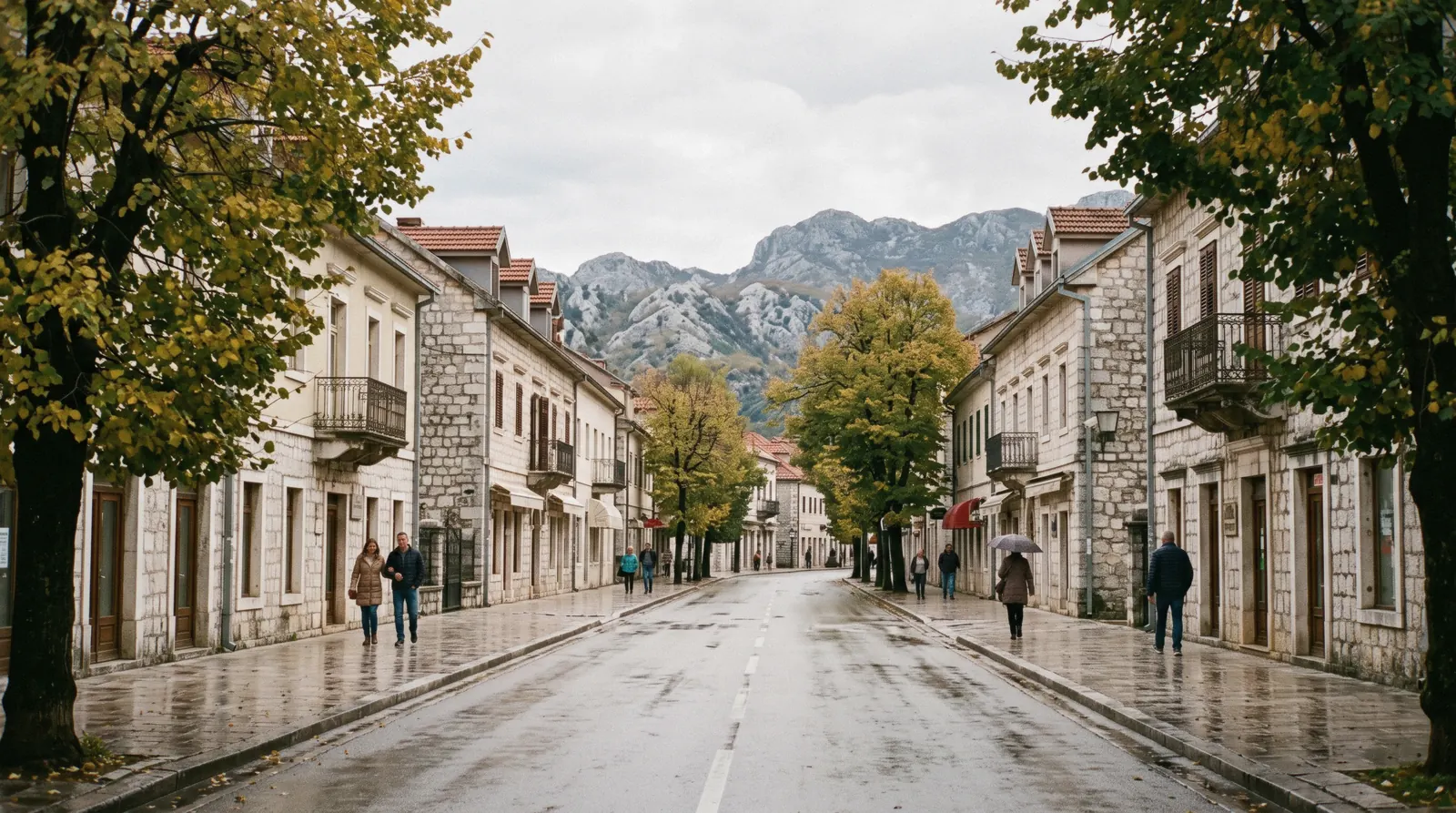
Cetinje: Montenegro's Old Royal Capital in a Day
Cetinje is the town Montenegro keeps coming back to. Ivan Crnojević founded it in the fifteenth century, with a castle in 1482 and a monastery in 1484, and it has served as the country's historic capital ever since. It sits in a small karst field below Lovćen National Park, about an hour inland from Kotor over the old mountain road. What you find today is a low, leafy town of former embassies, a royal palace turned museum, a monastery holding two of Orthodoxy's most famous relics, and a small church whose fence is made of rifle barrels taken from the Turks. It is on the UNESCO tentative list, and it feels nothing like the coast. This guide covers what to see, what the museums cost, how the day trips work, and how much time the town actually deserves. The full guide lives on Kotor City Guide.
Quick answer The answer first, then the details that decide it
Cetinje is Montenegro's historic capital, founded by Ivan Crnojević (castle 1482, monastery 1484), and the best Cetinje day trip from Kotor pairs the mountain road and the Kotor cable car with an afternoon among the palace, the monastery and the embassy streets. Do the museums alone if you love history. Take a guided day if you also want the Lovćen ridge, the village of Njeguši and someone else handling the hairpins. The full comparison of tours that include Cetinje lives on the day trips page.
Key facts
Opening hours
| All year | 09:00–17:00 |
|---|
Closed not stated
Admission
- Adult
- Museum of King Nikola about €8 ($9.13) official, €5 ($5.71) cash reported
- Reduced
- €4 ($4.56) pupils and students
- Free
- not stated
Planning it
- Time needed
- Half a day for the museums alone, a full day combined with Lovćen and Njeguši 1-3
- Address
- Cetinje, Montenegro
Tickets And Tours Compared. Figures come from the gate prices and the operator listings compared here. The euro figure is the official one and the dollar gloss converts at €1 = $1.14. Two honest ways to spend a Cetinje day. The official combined ticket covers the museums at your own pace. The two tours below carry you over the mountain and add context the walls do not provide. The tour platforms bill in your own currency, so the prices are listed in dollars as the platforms show them.
| Option | Price | What you get | Cancel | Book |
|---|---|---|---|---|
| Slow travellers and history readers who want Cetinje itself and no timetable | Slow travellers and history readers who want Cetinje itself and no timetable | Free to cancel up to 24 hours before | Check Availability | |
| First-time visitors who want the cable car, the serpentine, Njeguši and Cetinje in one day without driving | First-time visitors who want the cable car, the serpentine, Njeguši and Cetinje in one day without driving | Free to cancel up to 24 hours before | Check Availability | |
| Travellers with one day for the whole country who want the mausoleum, the coast and Cetinje together | Travellers with one day for the whole country who want the mausoleum, the coast and Cetinje together | Free to cancel up to 24 hours before | Check Availability |
Figures current in Q3 2026.
Tours That Include Cetinje
Both of these run from Kotor. They differ in ambition more than quality. The shorter one is the cleaner Cetinje story. The longer one is a whole-country sampler that happens to stop here. Atlantix Travel runs this 7h 30m loop that rides the gondola up Mount Lovćen's flank, drops through Njeguši on the serpentine and finishes in Cetinje's royal quarter. US$73, rated 4.4 by 66 reviewers. The operator asks for covered shoulders and knees at the holy stops, which matters because the monastery and the Vlach church are the point of the town. The full gondola story sits on the Kotor cable car page. 360Monte's 11-hour small-group day is the most complete single day you can buy in Montenegro: the coast, the old royal capital, the Lovćen mausoleum and the postcard bend of the Rijeka Crnojevića, ending toward Sveti Stefan. US$106.91, rated 4.9 by 682 reviewers, but read the fine print. Park and mausoleum entrances of about €16 ($18.26) are paid in cash on top, and the platform's feature listing shows $122.99 plus $16.08 in mandatory extras. It appears on the day trips hub too.
Cetinje exists because a ruler chose.
Cetinje exists because a ruler chose a cave-riddled karst field over a coastal plain. Ivan Crnojević moved his court here in the 1480s, building a castle in 1482 and founding the monastery in 1484, high above the Adriatic and hard to reach for the Ottoman armies that had swallowed the Montenegrin lowlands. For the next four centuries this small town was the seat of a state that survived by being difficult to invade.
When Montenegro gained international recognition in the nineteenth century, the great powers opened legations here, and the Embassies street still carries their houses in a string of different architectural styles, Austrian next to Russian next to Italian. Walk it slowly. It is the clearest surviving proof that this village of a few hundred people once conducted diplomacy with Europe.
The town's international standing is now recognised formally: Cetinje sits on the UNESCO tentative list. Practical line: the embassy quarter costs nothing to walk and needs no ticket, and it links the palace and the monastery on foot in minutes. For how the coast side of the same story developed, see the Bay of Kotor guide.
The Museum of King Nikola occupies.
The Museum of King Nikola occupies the royal palace built between 1863 and 1867 for the Petrović dynasty, and it is the single best-paid ticket in town. Inside you walk the rooms of Montenegro's last royal family: state rooms, living quarters and the objects of a court that governed a mountain kingdom from a modest house. The building matters as much as the collection.
It shows the scale of the state, small enough that its palace would be a wealthy merchant's townhouse anywhere else, and ambitious enough to host European royalty. The practical facts: admission is about €8 ($9.13) on the official National Museum list, with a €5 ($5.71) cash price reported at the door, and €4 ($4.56) for pupils and students. Museums open about 09:00-17:00.
If you plan more than one museum plus the Lovćen mausoleum, the combined Cetinje museums and mausoleum ticket at about €20 ($22.82) is the better buy. Check the National Museum site before you go. Plan forty-five minutes to an hour inside.
Compare it with Kotor's own Maritime Museum if you enjoyed that one. The two museums tell the same small-country story from opposite ends of the mountain.
The Cetinje monastery was rebuilt in.
The Cetinje monastery was rebuilt in 1701 on the site of the original 1484 foundation, and it remains the spiritual heart of the country. Two relics draw pilgrims from across the Orthodox world: the right hand of St John the Baptist and a particle of the True Cross. Even visitors with no religious interest tend to pause here, because the objects are genuinely famous and the church is small enough to feel the weight of them.
The practical line: entry to the monastery is a matter of respectful dress, covered shoulders and knees, and quiet inside. There is no published admission fee in the sources gathered for this guide. Visit outside the midday tour-arrival window if you want the church to yourself, since the Great Montenegro tour and its cousins pass through in waves.
Photography of the relics is treated with the seriousness you would expect, so follow the local custom rather than the crowd. Combine it with the palace in one morning or afternoon and you have done the two things people actually come for. For Kotor's own sacred inventory, the Cathedral of Saint Tryphon makes a natural comparison.
The Vlach church was built in.
The Vlach church was built in 1886 by King Nikola himself, and it holds the tombs of King Nikola and Queen Milena. But the detail everyone remembers is outside: the fence around the church is built from rifle barrels captured from the Turks, hammered into an ornamental screen. It is a piece of national messaging in iron, a statement that this small state's independence was bought with captured weapons, and it survives in plain sight on a quiet corner.
Practical line: the church sits a short walk from the palace and the monastery, costs nothing per any published source in this guide, and takes ten minutes. It is the kind of stop that a guided walk explains in one sentence and that you would otherwise walk past. If you take the cable car, Njeguši and Cetinje day tour you will likely reach it in the guide's company.
The tombs inside close the loop of the royal story that begins at the palace, since the king who built the church in 1886 lies behind his own fence of trophies.
Cetinje rewards focus more than endurance.
Cetinje rewards focus more than endurance. The table below is our honest allocation, built from what each stop contains and how the tours pace it. Half a day in town, or a full day if the mountain road is part of the plan.
| Stop | Realistic time | Why |
|---|---|---|
| Embassies street and town walk | 30-45 minutes | Free, flat, and the context for everything else |
| Museum of King Nikola | 45-60 minutes | The royal interiors are the core museum visit |
| Cetinje monastery | 20-30 minutes | Small church, two major relics, dress code applies |
| Vlach church | 10-15 minutes | The rifle-barrel fence and the royal tombs |
| Whole town only | Half a day | Enough for all four stops plus lunch at an unhurried pace |
| Town plus Lovćen and Njeguši | Full day | The shape of the cable car, Njeguši and Cetinje day tour |
The details that separate a drive-through.
The details that separate a drive-through from a real visit.
There is no railway and no.
There is no railway and no published bus fare table for this route in the sources gathered for this guide, so the honest options are a tour, a rental car, or asking at Kotor's bus station by the sea for current departures. The classic road is the Kotor serpentine, built between 1881 and 1884 under Austria-Hungary as a military route over Lovćen to Cetinje. It carries 25 numbered 180-degree hairpins plus about 75 further turns, and takes 30-45 minutes from Kotor to hairpin 25 before the road continues toward the capital. A rental car is what opens Njeguši, Cetinje and Lovćen in one day, and the serpentine is narrow but paved.
If you would rather not drive it, the Lovćen cable car, Njeguši and Cetinje day tour handles the road for you, or the hop-on bus covers the serpentine viewpoints though it is not a Cetinje service. English is widely spoken around Kotor's old town and the tourist info point by the Sea Gate can advise on current transport. The wider route-planning picture lives on getting around Kotor and the day trips hub.
The pins below cover the stops in this guide, centred on the town.
Nearby: Three Stops That Pair Well
Cetinje sits in the middle of Montenegro's densest day-trip triangle. These are the stops the tours combine it with.
Njeguši
The village on the serpentine between Kotor and Cetinje, best known as the birthplace of Petar II Petrović-Njegoš, Montenegro's poet-prince born 1813, whose birthplace a combined museum ticket covers. Family taverns on the main road run tastings of Njeguški pršut, the dry-cured, wood-smoked ham aged in the mountain air, with Njeguši cheese and bread. Stop on the way down or the way up. Full detail on the Njeguši page.
Lovćen National Park And The Njegoš Mausoleum
From Cetinje the road climbs into the park toward the mausoleum at Jezerski vrh, where 461 steps rise from the upper parking to Ivan Meštrović's seated Njegoš and the view from the Bay of Kotor to the Montenegrin highlands. The mausoleum charges €8 ($9.13) adult and €4 ($4.56) child or student per gate reports, opens about 09:00-18:00 from mid-April to mid-November and closes in winter from mid-November to early April. Park gate is €3 ($3.42) per person on recent reports, and the official national parks price list was unreachable when this guide checked. More on Lovćen National Park.
Budva
The coast road from Cetinje drops to Budva in well under an hour, which is why the Great Montenegro tour ends its loop there and toward Sveti Stefan. Budva's settlement is over 2,500 years old, the old town entry is free and the citadel charges about €5-6 ($5.71-6.85) reported. Pairing Cetinje's quiet with Budva's beach afternoon makes a full and well-balanced day by car. Route detail on Kotor to Budva and the Budva page.
Cetinje Questions
Is Cetinje worth visiting?
Yes, if you want Montenegro beyond the beaches. Cetinje has been the country's historic capital since Ivan Crnojević founded it, and it is the only place where you can stand in a royal palace, a relic church and a former embassy quarter within ten minutes of each other. It is on the UNESCO tentative list and it gets a fraction of the coast's crowds. If your trip is short and beach-only, skip it, but most visitors with two or more days in Kotor find the mountain road and the capital the best day they take. See is Kotor worth visiting for how this fits the wider trip.
How do you get from Kotor to Cetinje?
Three ways. A guided day such as the cable car, Njeguši and Cetinje tour handles everything, including the 25-hairpin serpentine built between 1881 and 1884. A rental car gives you the same road on your own schedule, and the serpentine is narrow but paved. There is no railway, and no official fare table for buses on this route appears in the sources this guide checked, so ask at the bus station or the tourist info point by the Sea Gate for current departures. Route context is on getting around Kotor.
What museums are in Cetinje?
The headline museum is the Museum of King Nikola in the royal palace built between 1863 and 1867, admission about €8 ($9.13) on the official list with €5 ($5.71) cash reported at the door. A combined Cetinje museums and mausoleum ticket runs about €20 ($22.82) and covers the National Museum sites in town plus the Lovćen mausoleum. Museums open about 09:00-17:00. Check the National Museum site for the current list before you travel.
What relics are in the Cetinje monastery?
The monastery, rebuilt in 1701 on Ivan Crnojević's 1484 foundation, keeps the right hand of St John the Baptist and a particle of the True Cross. These are among the most venerated relics in the Orthodox world and pilgrims travel to Cetinje specifically for them. Dress with covered shoulders and knees and keep quiet inside. There is no published admission fee in this guide's sources.
How much time do you need in Cetinje?
Half a day covers the town properly: the palace at 45-60 minutes, the monastery at 20-30 minutes, the Vlach church at ten, and the embassy streets in between. A full day makes sense if you add Lovćen, Njeguši and the mountain road, which is exactly what the 7h 30m cable car and Cetinje tour is built around. Less than half a day means rushing the palace or skipping it.
Do you need cash in Cetinje?
Carry some. Montenegro uses the euro unilaterally and is not a eurozone member, and reported door prices for the palace, the park gates and the tour extras are all quoted in cash euros, about €16 ($18.26) per person on the Great Montenegro tour alone. Cards work at the official museum list prices but the cheaper reported cash prices are exactly that, cash. The wider money picture is on Kotor costs.
Is Cetinje a good day trip with children?
It works, with caveats. The town is flat and low-traffic, the palace's €4 ($4.56) pupil and student rate makes the museum cheap for families, and children tend to remember the fence of rifle barrels more than any reliquary. The mountain road is the tricky part for carsick kids, so the gondola on the cable car and Njeguši day is the gentler approach. General family planning is on Kotor with kids.
Cetinje on Film
Three videos that show the place before you go. They load from YouTube only when you press play.
Cetinje Royal Capital walk | Montenegro
A walk or ride through the subject of this page.
Video: Latif WorldPOV Walk: Historic Cetinje - Royal/Culture Capital (Montenegro) 🇲🇪
A walk or ride through the subject of this page.
Video: Where Dafuq?Relaxing 4K Walking Tour in Cetinje, Montenegro | Historic Royal Capital
A walk or ride through the subject of this page.
Video: Walk VirtualVideos load from YouTube only when you press play.
Prices, hours and terms are set by the venue or operator and confirmed at checkout.
We may earn a commission if you book through one of our links, at no extra cost to you. Full affiliate disclosure